

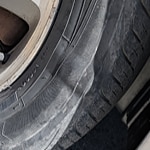
Unfortunately, some drivers in Pleasanton, CA have been unlucky and have had to deal with tire blowouts, which can be very dangerous. There are steps you can take to reduce the likelihood of it happening to you.
Unfortunately, some drivers in Pleasanton, CA have been unlucky and have had to deal with tire blowouts, which can be very dangerous. There are steps you can take to reduce the likelihood of it happening to you.
When we think of important parts of our vehicle, what generally comes to mind first are the engine and transmission. While these two parts are vital to your vehicle’s performance, there are smaller things that are equally important.
These are belts, pulleys and hoses. For every belt and hose you find under the hood, there is an important purpose for it. Automotive belts help provide power to the power steering pump, radiator cooling fan, alternator, water pump, and air conditioning compressor. If one of these belts break, these large parts will stop working.
Many of the components in the braking system are designed to last the lifetime of your vehicle. Most drivers encounter fairly routine brake service while owning their vehicle, only needing the occasional maintenance visit to keep the whole system running smoothly.
Brake pad changes are necessary to prevent damage to the rotors and to ensure safe braking. It can be hard to predict exactly when you’ll need a new set, but drivers can get a good sense of how often they’ll need one based on their own routine use. With normal use, brake pads can last 30,000…


Your vehicle needs filters to clean all kinds of things, like fuel, oil, and air. During the course of doing their job, filters accumulate all the impurities that would otherwise clog various engine systems.

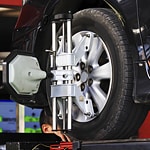
Keeping your vehicle running straight and in good condition requires many types of maintenance. One type of maintenance, which is often put off, is an alignment. Alignments are very important not only because they keep your tires from wearing out prematurely, but they also help provide you with a comfortable ride in Pleasanton, CA.
Tire size is an important factor when buying new tires for your vehicle. The size indicates the type of vehicle and the diameter of the tire. To find out what size you need, you must know what type of vehicle you have.
Most vehicles have a letter-and-number combination in their tire size. This means that there are two numbers separated by a letter, such as 235/70R16. The first number represents the width of the tire, while the second number represents its height or aspect ratio.
A timing belt is a crucial component in your car's engine, and it is responsible for timing the engine's valves. It is located inside the engine and sits atop the crankshaft. The timing belt is made of durable rubber and is toothed on one side. As the crankshaft turns, it rotates the timing belt. The timing belt then turns the camshaft, which opens and closes the valves in synchrony with the pistons moving up and down in the cylinders.
A timing belt typically needs to be replaced every 60,000 to 100,000 miles, and if it breaks…

 When you have your tires rotated, it means that each one will be moved to another position on your vehicle. This allows for even wear and tear while you're driving around Hayward, CA. If you don't have your tires rotated on a regular schedule, then you might see that the tread is worn down more on one of them than on the others.
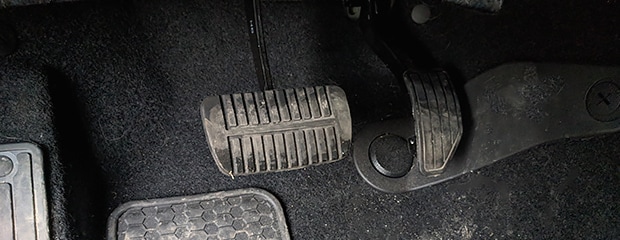
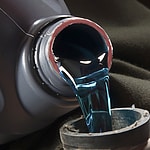 The braking system is a vital part of every vehicle that helps you slow down and stop when needed. This process is only made possible thanks to brake fluid. Far too many drivers do not understand how their vehicles work, so we at East Bay Authorized Service Center want to help everyone get a better understanding of brake fluid.
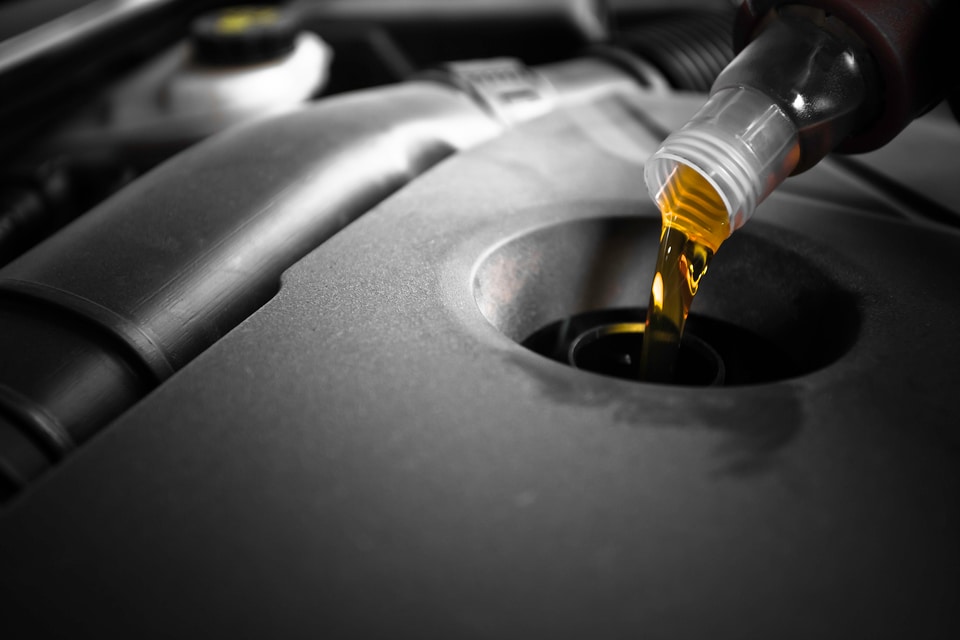
You've probably heard it before:
You should change your oil every 3,000 miles.
Everybody does, right? It's a figure that young drivers start hearing as soon as they start driver's ed--long before they even get their first car. 3,000 miles or 3 months is one of the most common oil change recommendations.
It's also one of the most common engine oil myths that you'll find.